They lock under load
Plywood levers on a rod, running on bronze bushings. The catching face is outboard of the pivot, so the sheet's own weight turns each dog up into its stop pin and locks it. Ease the sheet back and they fall clear on their own.
BWP-P-001 · Pro Series · Plan package v1.1
CNC-cut birch plywood stands that let one person turn a full 97 × 49 sheet of MDF, plywood or particleboard face down and put it back on the table — by sliding, tipping and pushing instead of lifting.
Founding price for the first 50 buyers. Regular $89.

The problem
You cut the face, and then you need the back. On a nested job that means wrestling 96 lb of sheet off the table, over, and back on — usually alone, usually against the clock, usually with your back. Most shops either wait for a second person or take the risk.
The flipper turns that into a sequence that gravity does most of the work for. Two independent stands sit out from the table edge with a walkway between them. The sheet slides off onto catch dogs, tips back onto the wings, and the wings push level and latch so the sheet can be pushed home. Nothing gets lifted.
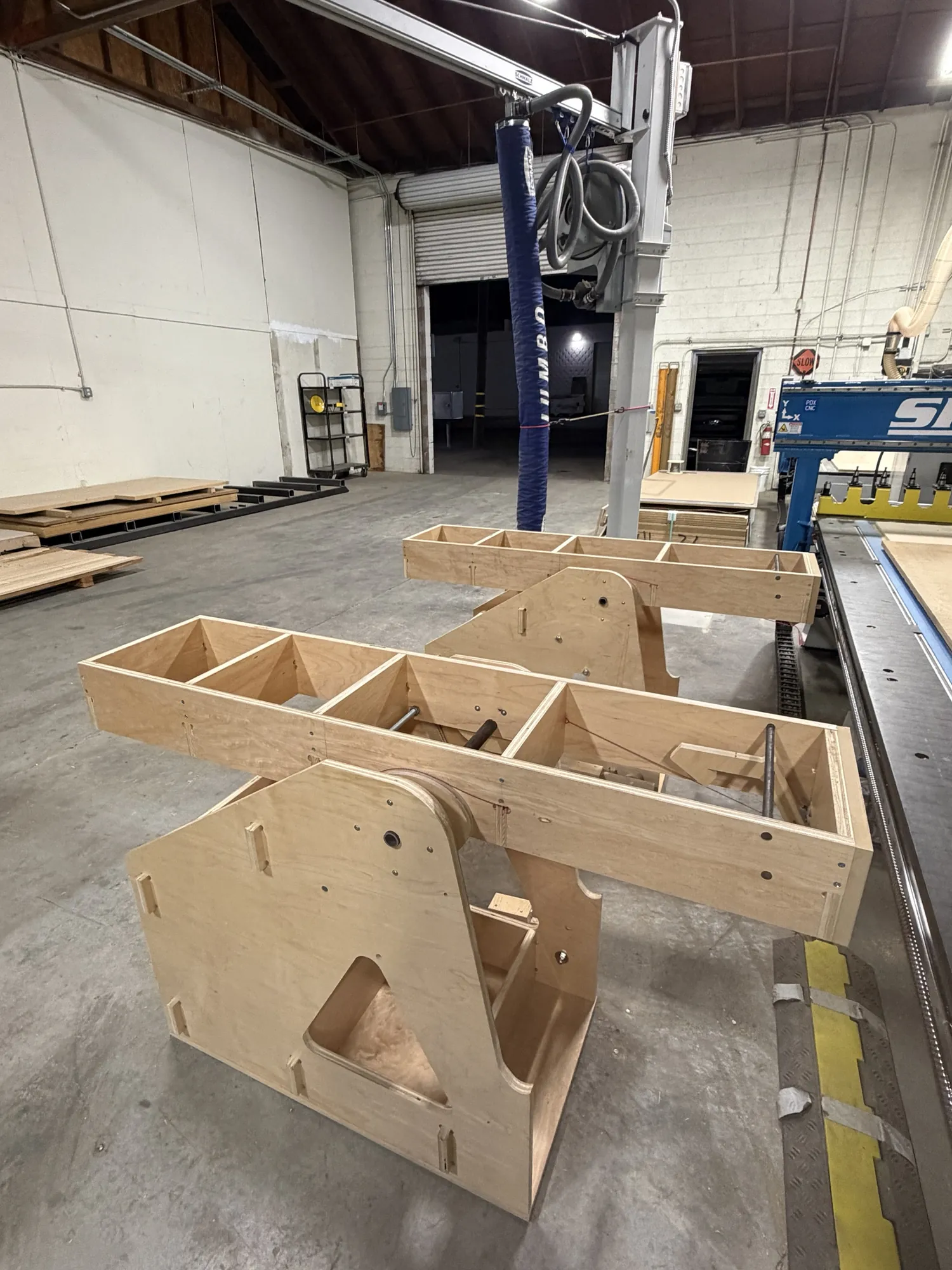
Mechanisms
Plywood levers on a rod, running on bronze bushings. The catching face is outboard of the pivot, so the sheet's own weight turns each dog up into its stop pin and locks it. Ease the sheet back and they fall clear on their own.
A gravity pawl on the walkway-side panel. The latch pin rides down the pawl's ramp, pushes it aside, and the pawl drops back over it. Any lift on the wing drives the pawl further shut — the sheet cannot force it open.
A braided cord from each dog runs out through the rail, over the oval doubler, to the level tie. Raising the wing pulls the dogs back up onto their stop pins by itself. A plywood treadle releases the latch; the pawl's own weight lifts the pedal back.
Inside the manual
Every dimension in the manual is written by the same parametric model that writes the DXF cut files, so the drawings, the cut files and the SketchUp model always agree. Tap any page to read it full size.
Every number on these previews has been removed. Part names, notes, drawings and structure are intact so you can judge the depth — the dimensions, quantities, hardware sizes and coordinates arrive with the package.
Package contents · v1.1
Setting out
| Item | Specification |
|---|---|
| Sheet | 97 × 49 × 3/4, up to 96 lb — MDF, plywood or particleboard |
| Built from | 19 mm birch ply (0.748, slots 0.756). An 18 mm-class 0.717 variant ships in the same package |
| Stands | Two independent units, 36.51 in walkway between them, 24 in out from the table edge |
| Table height | 35.00 in as drawn — parametric, so another height is a re-run of the generator |
| Wings | Rest at 80°, land flush with the table on the level tie |
| Axle | 1-1/16 in OD tube on the reference build. Bore = your measured tube OD + 1/32. Measure it — "1 inch" black pipe is 1.315 OD and 1 inch EMT is about 1.163; neither fits |
| Joinery | Dogboned through-tenons, dry fit, no glue anywhere in the wood |
| Gantry clearance | Wings swing to within 6.8 in of the table edge — flip with the machine stopped and the gantry parked clear |
| Hardware | About $100–150 per the schedule, plus three sheets of ply |
Validation
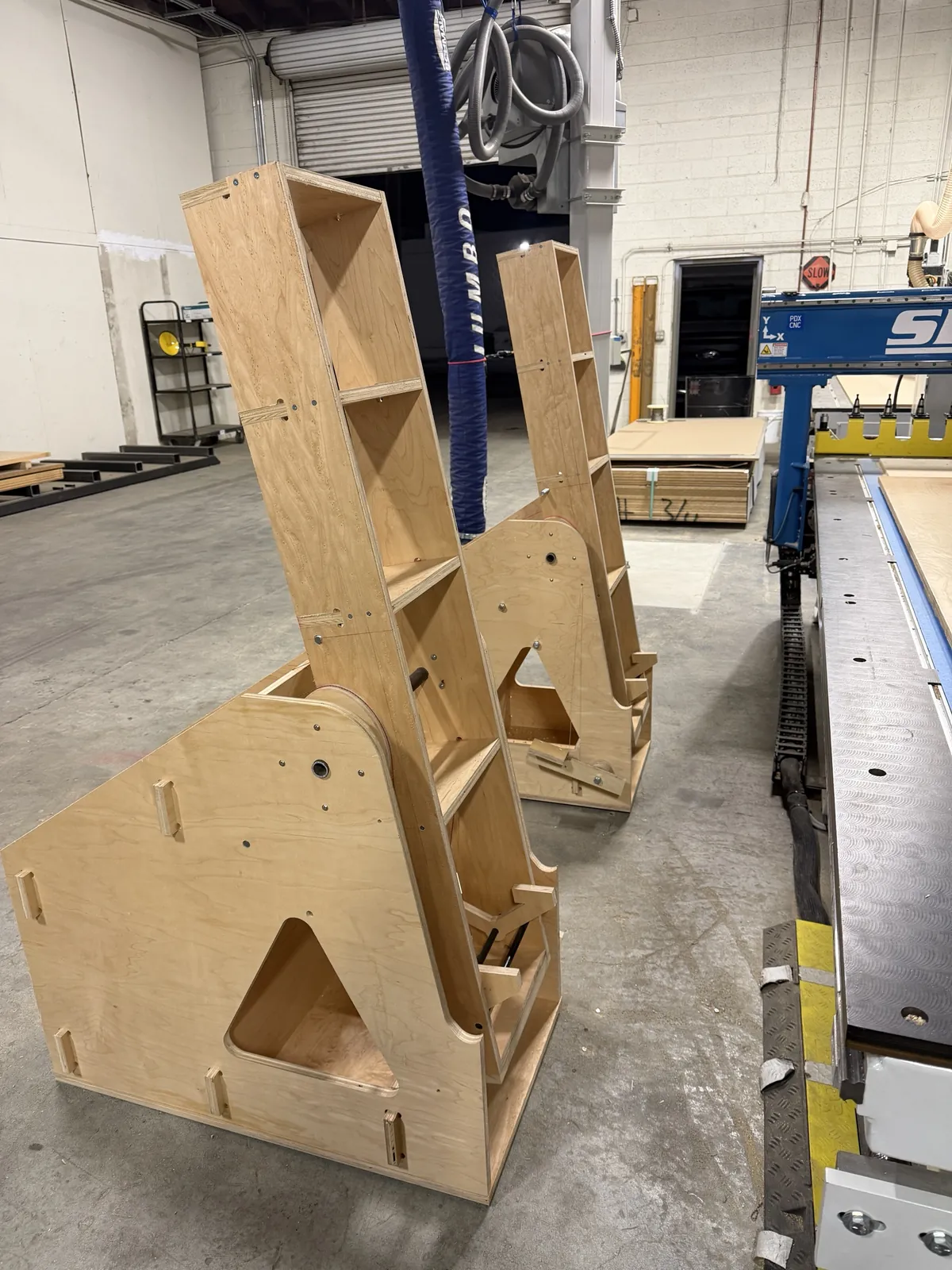
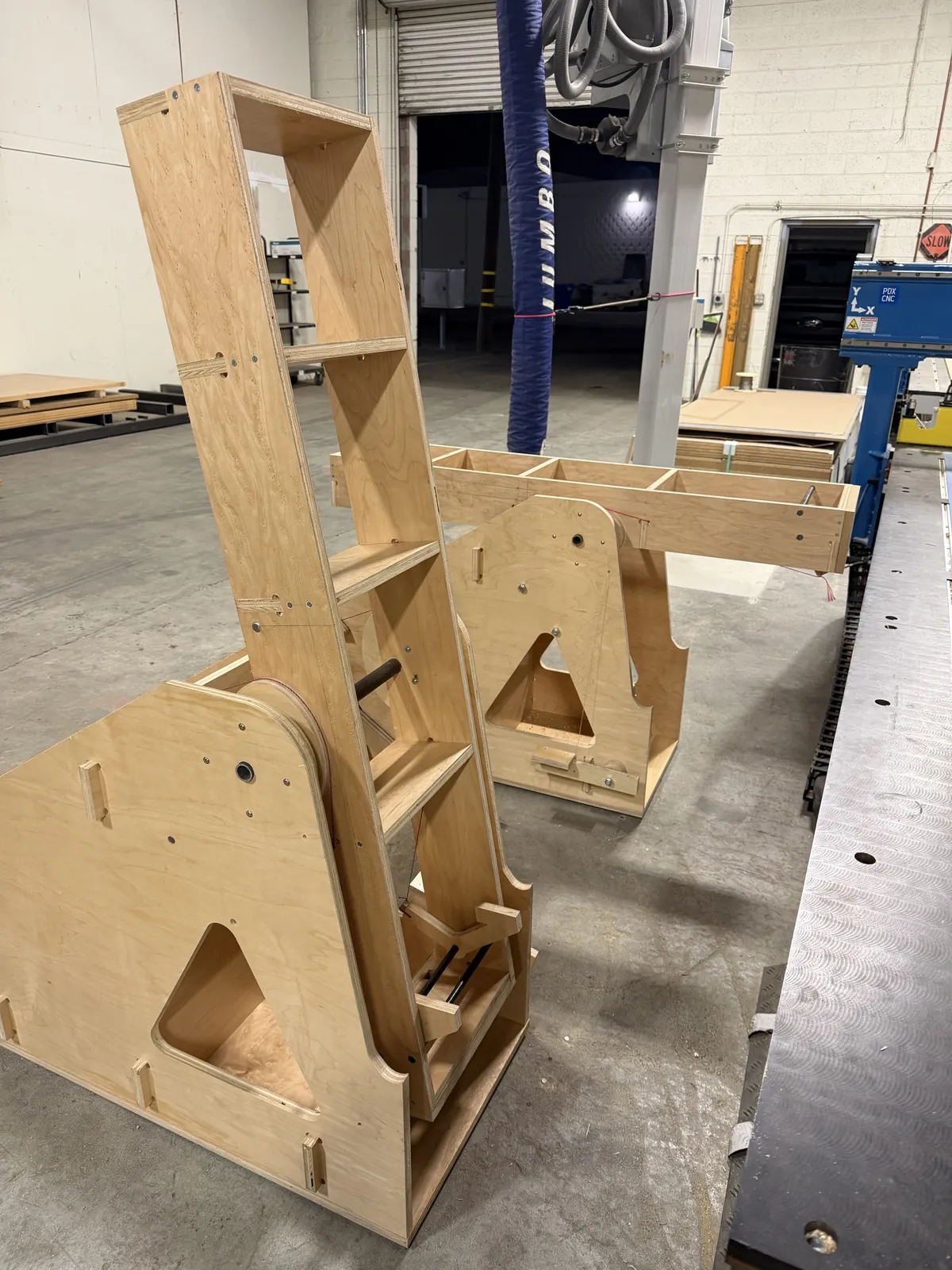
The prototype is built and running in my shop. That is not the same as an engineering approval, and the manual doesn't pretend otherwise — page 12 is a test procedure and build record you sign before the first full sheet goes on it.
Stated plainly
Order
BWP-P-001 · Sheet Flipper · v1.1
Founding price — first 50 buyers
Card, Apple Pay, Link, Cash App and Amazon Pay. Digital files — no refunds once the package has been sent, so ask me anything first.
One license covers one shop.
Buyer is responsible for fit, clearances, loads and machine compatibility. Not an engineering approval. No safe working load claimed.
Not today
The downdraft table, the tool bay organizer, the push bar and the nest offload station are all in the pipeline. No newsletter, no drip — an email when a plan package goes live.
Questions